
How LGBTQ+ informed is Indian psychiatric training? An analysis of postgraduate exam questions across three universities
This study is an analysis of ten years' worth of question papers from various universities in India to assess the representation of LGBTQIA+ related topics.
We found that out of the 2,373 questions reviewed, only 11 (0.46%) were related to LGBTQ+ topics. Many of these questions also used outdated terminologies. This study was featured in Asian Scientist Magazine.


LGBTQIA+ Cultural Competency of Psychiatrists in an Indian State: A Cross-Sectional Study
This research was published in the Journal of Homosexuality on March 5th, 2025. This is the first Indian study evaluating the cultural competence of psychiatrists. In accordance with the publisher's policy, we have made the final submitted version available for download.


Sexual Orientation Change Efforts Among LGBT+ People of Kerala: Prevalence, Correlates, and Mental Health Aspects
This study won the DS Raju Award, given by the south India branch of the Indian Psychiatric Society, for the best research paper presented by a postgraduate student, in 2022. The resultant paper was published online on 6th February 2023 in the Journal of Homosexuality.
In accordance with the publisher's policies, we have made the final submitted version available for download. This paper was featured in The News Minute on February 15, 2023 and in Mathrubhumi on February 17, 2023 and in an article published on March 4, 2023.

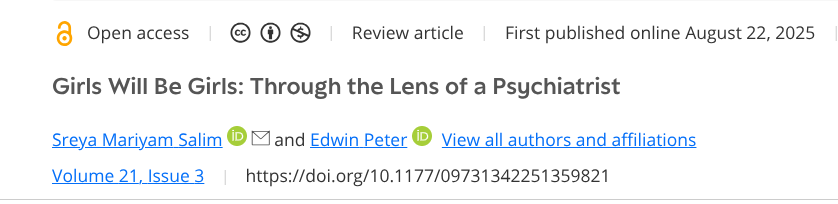
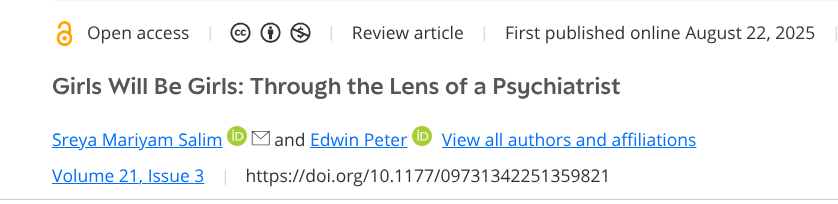
Girls Will Be Girls: Through the Lens of a Psychiatrist
This is a review of the film Girls Will Be Girls from the perspective of a mental health professional, published in the Journal of the Indian Association for Child and Adolescent Mental Health. The article examines the psychological and developmental themes portrayed in the film and reflects on adolescent identity, sexuality, and emotional wellbeing. It is co-authored with Dr. Edwin Peter, founder of Sex Education Kerala.

When the body feels foreign: A case report
This case report, published in the Kerala Journal of Psychiatry, describes a rare and severe disturbance in body ownership in a young woman with psychosis, presenting with delusions of bodily estrangement, repeated self-harm, and significant social and functional impairment. Despite receiving antipsychotic treatment, cultural beliefs hindered adherence and recovery. The case highlights the diagnostic complexity of such presentations and the vital impact of cultural and social factors on illness perception and treatment engagement.

Marriage Equality and Mental Health
Published in the Indian Journal of Social Psychiatry, this article reflects on the mental health implications of the Supreme Court of India’s recent denial of legal recognition for same-sex marriages. Drawing comparisons with 33 countries where same-sex marriage is legal, it highlights how marriage equality can enhance social inclusion, relationship stability, economic well-being, and mental health. Evidence shows children of same-sex parents fare well, though societal stigma remains a concern. The article advocates for a holistic, inclusive approach to support the well-being of the LGBTQIA+ community in India.

Mental Health at Margins
Published in the Indian Journal of Psychological Medicine, this article examines how intersecting social identities—such as caste, class, gender, religion, and socioeconomic status—shape mental health experiences and access to care in India. It highlights the limitations of traditional, uniform approaches in psychiatry and emphasizes the need for an intersectional framework that addresses overlapping vulnerabilities. Structural changes in mental health training, policy, and practice are seen as essential for delivering inclusive and culturally sensitive care.
How LGBTQ+ informed is Indian psychiatric training? An analysis of postgraduate exam questions across three universities
This study is an analysis of ten years' worth of question papers from various universities in India to assess the representation of LGBTQIA+ related topics.
We found that out of the 2,373 questions reviewed, only 11 (0.46%) were related to LGBTQ+ topics. Many of these questions also used outdated terminologies. This study was featured in Asian Scientist Magazine.

